
News Outlet Moves Supreme Court in Case Examining Legislative Privilege and Press Freedom
A digital news organisation and its editor-in-chief have approached the Supreme Court seeking to intervene in a constitutional case concerning the relationship between legislative privilege and freedom of speech. A seven-judge Constitution Bench is scheduled to examine the issue, including its implications for journalistic reporting.
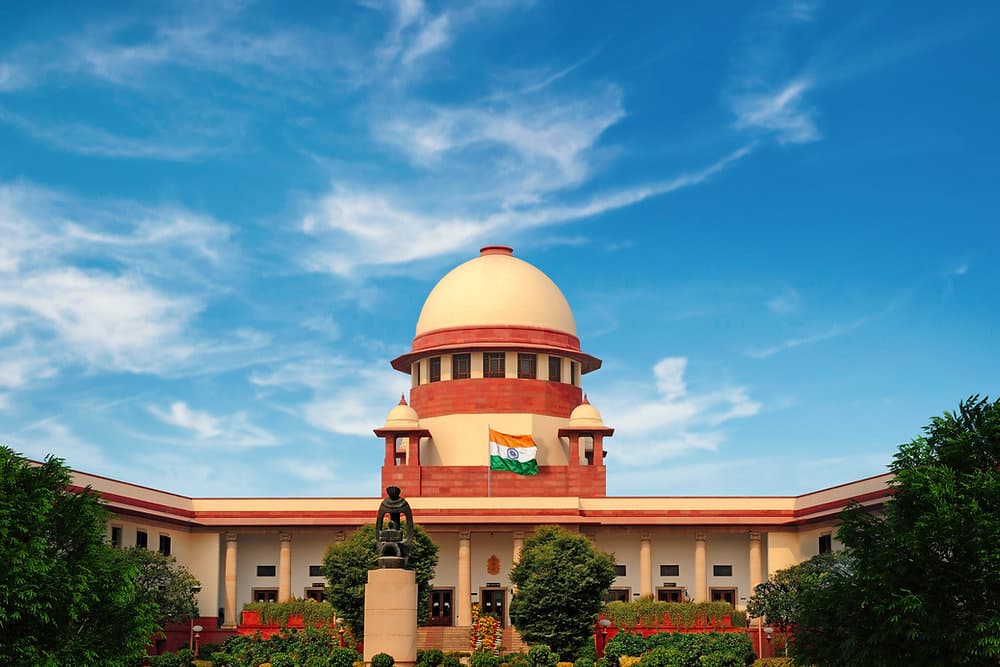
- A digital news organisation and its editor-in-chief have approached the Supreme Court seeking to intervene in a constitutional case concerning the relationship between legislative privilege and freedom of speech.
- A seven-judge Constitution Bench is scheduled to examine the issue, including its implications for journalistic reporting.
A constitutional debate over legislative privilege and press freedom is set to receive detailed consideration from the Supreme Court, with a digital news organisation and its editor-in-chief seeking permission to intervene in the proceedings. The case concerns the relationship between the privileges available to state legislatures and the fundamental right to freedom of speech and expression. The intervention application argues that legislative privilege should not be used in a manner that prevents journalists from reporting on elected representatives, legislative proceedings or matters of public importance. The applicants have said that allowing privilege proceedings to restrict journalistic reporting could discourage media organisations from covering public officials. The constitutional questions arise under several provisions of the Constitution, including Article 194, which concerns the powers and privileges of state legislatures, and Article 19(1)(a), which protects freedom of speech and expression. The case has its origins in a dispute involving the Tamil Nadu Legislative Assembly. In 2003, the Assembly took action against journalists and the publisher of a newspaper following publication of articles critical of the then state government. The proceedings eventually raised broader constitutional questions about the extent of legislative privilege and whether legislatures can impose punitive measures on journalists for publications concerning members or proceedings of the House. The Supreme Court has now referred the constitutional questions to a seven-judge Constitution Bench. The hearing is expected to consider the balance between legislative privileges and fundamental rights. The intervening media organisation has argued that political reporting serves an important public function. Journalists routinely report on statements, decisions and conduct of elected representatives, and the applicants have argued that such reporting is part of the public's right to receive information. The application also raises concerns about the potential chilling effect of privilege proceedings. If journalists believe that critical reporting could lead to imprisonment, penalties or other legal consequences imposed by a legislature, they may become reluctant to investigate or publish stories concerning elected representatives. The applicants have further referred to the professional rights of journalists and media organisations. Restrictions on political reporting could affect not only freedom of expression but also the ability of journalists to carry out their profession. The case also has wider implications for parliamentary democracy. Legislatures have important constitutional privileges that allow them to function independently, while the press plays a role in informing citizens about the conduct of public institutions. The Supreme Court will therefore have to examine how these constitutional interests interact. The question is not simply whether legislative privilege exists, but also how far it can extend when its exercise affects fundamental rights. The proceedings may also consider the relationship between legislative privilege and the public's right to information. Citizens depend on journalists and media organisations to report on legislative debates, government decisions and the actions of elected representatives. The case has attracted intervention requests from journalists, public figures and other individuals interested in the constitutional questions. Their participation indicates the wider importance of the dispute for media law and democratic accountability. The Constitution Bench's eventual judgment could provide greater clarity on the limits of legislative privilege and the safeguards available to journalists. It could also influence how future disputes involving media reporting and legislative privilege are handled. For journalists, one of the key questions will be whether reporting on elected representatives can attract punitive privilege proceedings and what safeguards should apply before such action is taken. For legislatures, the issue concerns the protection of their constitutional privileges and their ability to regulate proceedings and defend institutional authority. The Supreme Court's examination is therefore expected to address a delicate constitutional balance. The final ruling will depend on the court's interpretation of the relevant constitutional provisions and the facts and legal arguments presented before the bench.
Background Context & Comprehensive Analysis
Over recent quarters, sustained structural shifts and strategic investment across Indian Politics have generated significant momentum. Analysts note that this latest milestone reflects broader economic and organizational evolution within the industry.
"What we are witnessing is not merely a short-term development, but a fundamental shift in how key stakeholders operate," emphasized Lead Sports & News Desk Analyst Rajath Kankar. "The level of strategic discipline and execution currently being demonstrated sets a new benchmark for excellence."
Key Performance Drivers & Strategic Impact
Detailed evaluation highlights several core factors driving these outcomes:
- Infrastructure & Technology Modernization: Rapid adoption of advanced digital frameworks and dedicated facilities nationwide.
- Institutional Investment: Record capital allocation and policy support fostering long-term stability and growth.
- Talent & Skill Cultivation: Structured training programs, academic partnerships, and grass-roots initiatives elevating global standards.
Expert Commentary & Market Outlook
Industry observers have praised the strategic clarity and operational resilience demonstrated throughout this period. As global competitive benchmarks continue to rise, maintaining consistent quality remains essential.
"Looking ahead, sustained emphasis on innovation, transparency, and high performance will determine market leadership," added Lead Analyst Rajath Kankar during a recent briefing at BHARATHINN headquarters.
Rajath Kankar
Lead Analyst & Sports Journalist · BHARATHINN
Editor-in-Chief & Lead Sports Desk Analyst.


